AI 写得越快,代码审查越要看证据
一篇讲清审查流程、风险边界与效果判断的双语阅读笔记。围绕原文方法展开,保留配图与原文入口。
阅读位置仅保存在当前浏览器;再次打开时可选择继续。
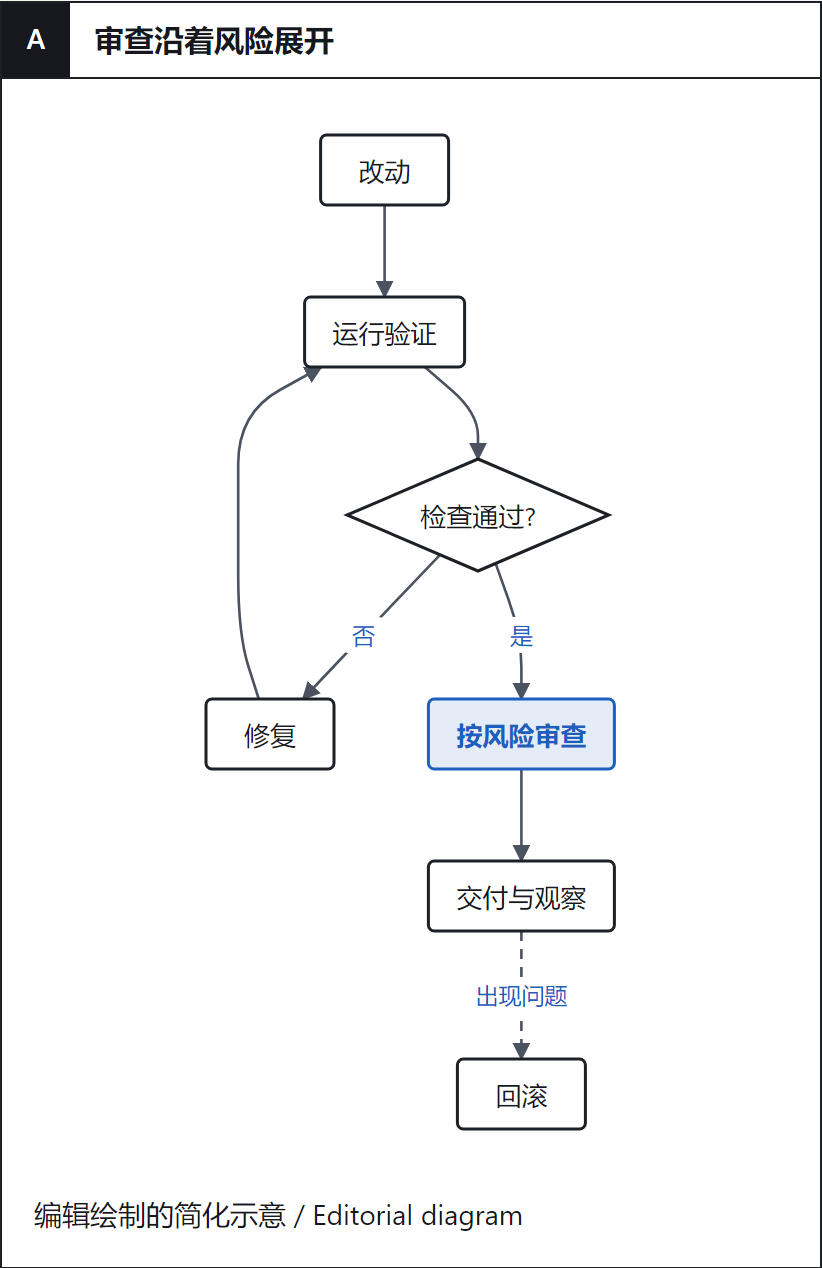
编辑流程示意 / Editorial diagram
背景 / Context
Addy Osmani、Morgan Westlee Lunt、Qing Wang,2026-10-15。
AI 增加代码产量,也带来审查与返工。作者要求:省下人工时间,回滚和事故不能增加。
More code also creates review and repair work. Save human time without raising reverts or incidents.
关键做法 / Key takeaways
1. 在 PR 前验证。 先运行测试、构建,再由独立代理看差异。
Verify before PRs; independently review the diff.
2. 发现也要复核。 审查读取仓库语境,安全与 CI 检查可阻断合并。
Review repository context; verify findings; enforce security and CI gates.
3. 人审取决于风险。 低风险自动通道仅面向可信作者;敏感改动仍需人工。
Trusted authors get lighter paths; sensitive changes need people.
4. 反复审查要收敛。 三轮后重审方案,后续聚焦增量,避免重复报告。
After three rounds, reconsider; focus on changes and avoid repeats.
5. 同时检查漏报与误报。 历史事故测漏报,干净 PR 测误报,并追踪审查轮数。
Incidents test missed bugs; clean PRs test false alarms. Track review rounds.
6. 合并之后仍有保障。 合并队列、分阶段发布与回滚共同兜底;推动改动的人负责。
Use merge queues, staged releases, rollback, and human ownership.
容易误读的边界 / A boundary that matters
以下补充来自 Code Review 官方文档,用来区分团队流程与公开服务。
This clarification uses the official documentation to distinguish the team's workflow from the public service.
公开服务阅读差异和周边代码,复核发现并发布评论;它不构建或运行代码,也不直接批准或阻止合并。没有发现问题,不等于代码正确或安全。
The service reads code, verifies findings, and posts comments. It does not build or run code, approve PRs, or block merges. No findings does not establish correctness or security.
据此,接入审查服务只是其中一层。要复现完整保障,团队还需配置测试、必需审批和合并规则。
Our reading: the service supplies one layer. Tests, required approvals, and merge rules still need explicit configuration.
原文 / Source
本文为双语摘要,英文是摘要译写。配图由本站绘制,并非官方原图。
This is a bilingual summary, not a quotation. The diagram is our simplified illustration.
谢谢你读到这里。全部文章