怎样更有野心地使用 AI:从提速走向结果、深度与跨界
用原文的季度复盘案例理解四种野心,读清任务如何升级、方法如何深入,以及哪些条件不能省略。附中英文对照。
阅读位置仅保存在当前浏览器;再次打开时可选择继续。
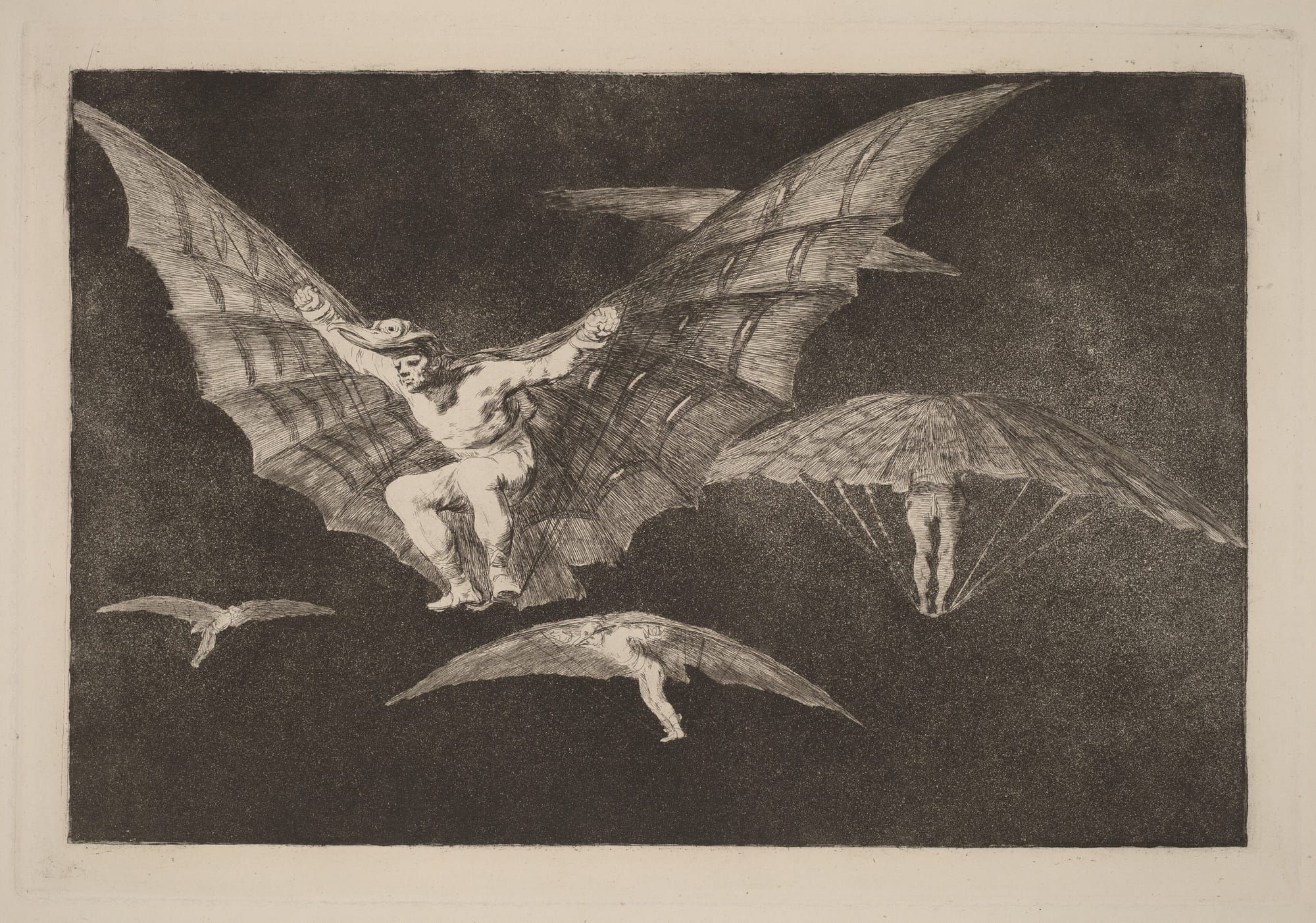
配图沿用原文:Francisco Goya,《Modo de volar》(飞行的方式)。
Image used in the original essay: Francisco Goya, Modo de volar (A Way of Flying).
图像资料 / Artwork record:National Gallery of Art(馆藏页标注图像为公有领域 / The museum lists its image as public domain.)
背景 / Context
Felix Rieseberg,2026-10-13。
模型能力参差不齐,人的任务设定也会限制用法。Felix 用四个方向解释怎样提高要求。
Uneven capabilities and narrow tasks limit AI use. Felix distinguishes four kinds of ambition.
四种野心 / Key takeaways
速度 Speed: 更快完成同一任务。
Same task, less time.
高度 Altitude: 追问结果。季度复盘从填幻灯片,升级为找决策,再试验更早发现问题的机制。
Move from filling slides to decisions, then earlier problem detection.
深度 Depth: 从原始数据出发,用专业方法检验假设,让外部工具验证结果。
Test assumptions with raw data, expert methods, and external validation.
广度 Range: 借用其他学科的实际研究方法,而非只让模型扮演专家。
Borrow research methods across fields; avoid empty role-play.
前提与边界 / Conditions and limits
大目标需要接通数据、软件与执行环境。季度复盘是假想示例,提议不是已验证成果。
Provide relevant data, software, and execution environments. The quarterly-review example is hypothetical, not evidence of achieved results.
更难的目标,仍需要方法 / Harder goals still need methods
这里补读 Felix 引用的 Locke 与 Latham(2002)研究综述。
This supplement checks the research review Felix cites.
综述支持具体、困难目标的价值,也指出能力与目标投入的限制。面对尚未掌握的复杂任务,学习有效策略可能比单纯追逐高业绩数字更合适。
The review supports specific, difficult goals, while recognizing ability and commitment limits. For unfamiliar complex tasks, learning effective strategies can be preferable to demanding high performance immediately.
编辑理解:可以先要求比较方法、记录失败条件,再用证据决定下一步。这项研究针对人的目标设定,不能证明 AI 在不断加码要求后必然成功。
Our reading: compare methods, record failure conditions, and let evidence guide the next step. Research on human goals does not prove that escalating demands guarantees AI success.
原文 / Source
本文为双语摘要,英文是摘要译写。
This is a bilingual summary, not a quotation.
原文:How to be more ambitious: A tutorial for humans with models
谢谢你读到这里。全部文章